

My projects
Photo Video Blog Books
Goltsov Sergey
I serve the art of medical doubt

Buffalo. History of the creation of the custom motorcycle

Ещё в блоге:

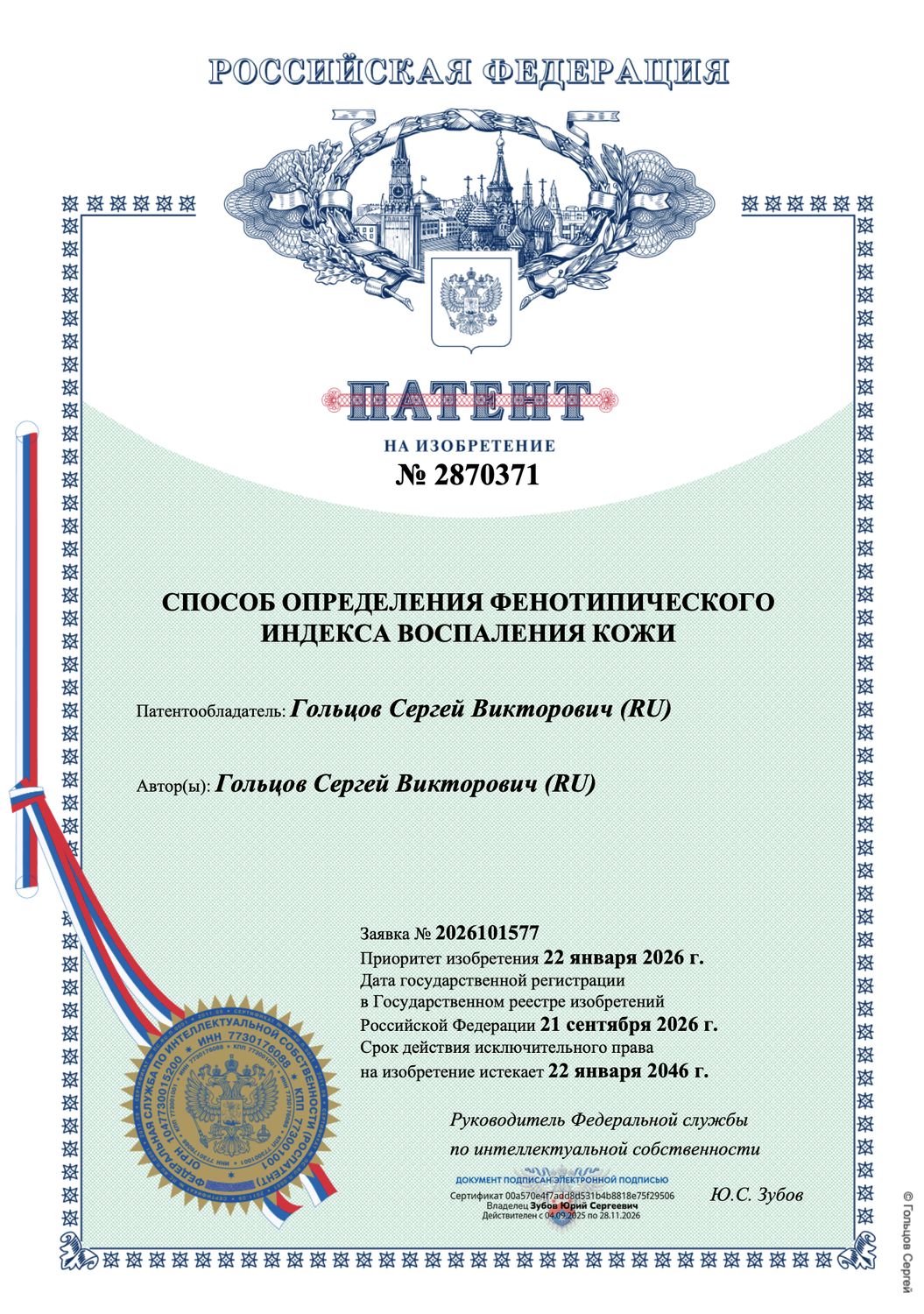
Method for obtaining a viable heterogeneous population of skin cells (patent for invention)

The invention relates to the field of pharmaceuticals and biology and represents a method for obtaining a viable heterogeneous population of skin cells, which includes taking a skin biopsy at a depth of ...

To be remembered and used

Skin and venereal diseases are among the oldest diseases of mankind that have accompanied humans at all stages of evolution. It is worth noting that the oldest example of medical literature, namely a clay tablet with a Sumerian text found in Nippur (in modern Iraq), tells about the treatment of skin diseases. After tens of thousands of years, I want to talk and write about skin and venereal diseases.

The effectiveness of skin products

The assessment of the safety of products supplied to the market, without which the sale is impossible and illegal, protecting the consumer's health, does not guarantee him the effectiveness declared by the manufacturer. Meanwhile, there has long been equipment for assessing skin parameters, which in the hands of specialists can be used to objectively assess the effectiveness of cosmetic products and hardware methods.

In more detail...

Sacred Paste, Smoke Baths and the Charm of the Himba Cultural Code

The Himba tribe is one of the most colorful and unique peoples of Africa, living in northern Namibia, in the Kunene region, near the border with Angola. It is a mistake to assume that these people are wild. Many Himba have dual citizenship - Himba and Namibia (not many of us can boast passports from two countries :)), but they do not fully recognize Western laws. Their culture, way of life and appearance have remained virtually unchanged for centuries despite globalization. It is understandable that young people leave for the cities, but they also often return to their roots. And why? Let's try to figure it out together...